Wi-Fi 7 vs Wi-Fi 8 in 2026: What’s the Difference and Should You Upgrade?
Wi-Fi technology is entering its next generation. Discover what Wi-Fi 7 and Wi-Fi 8 actually offer, how they are different, and which one makes sense for your home.
📡 Wi-Fi Is About to Get Another Major Upgrade
For years, every new Wi-Fi generation has promised faster internet. But the wireless industry is now moving beyond the simple race for higher speed.
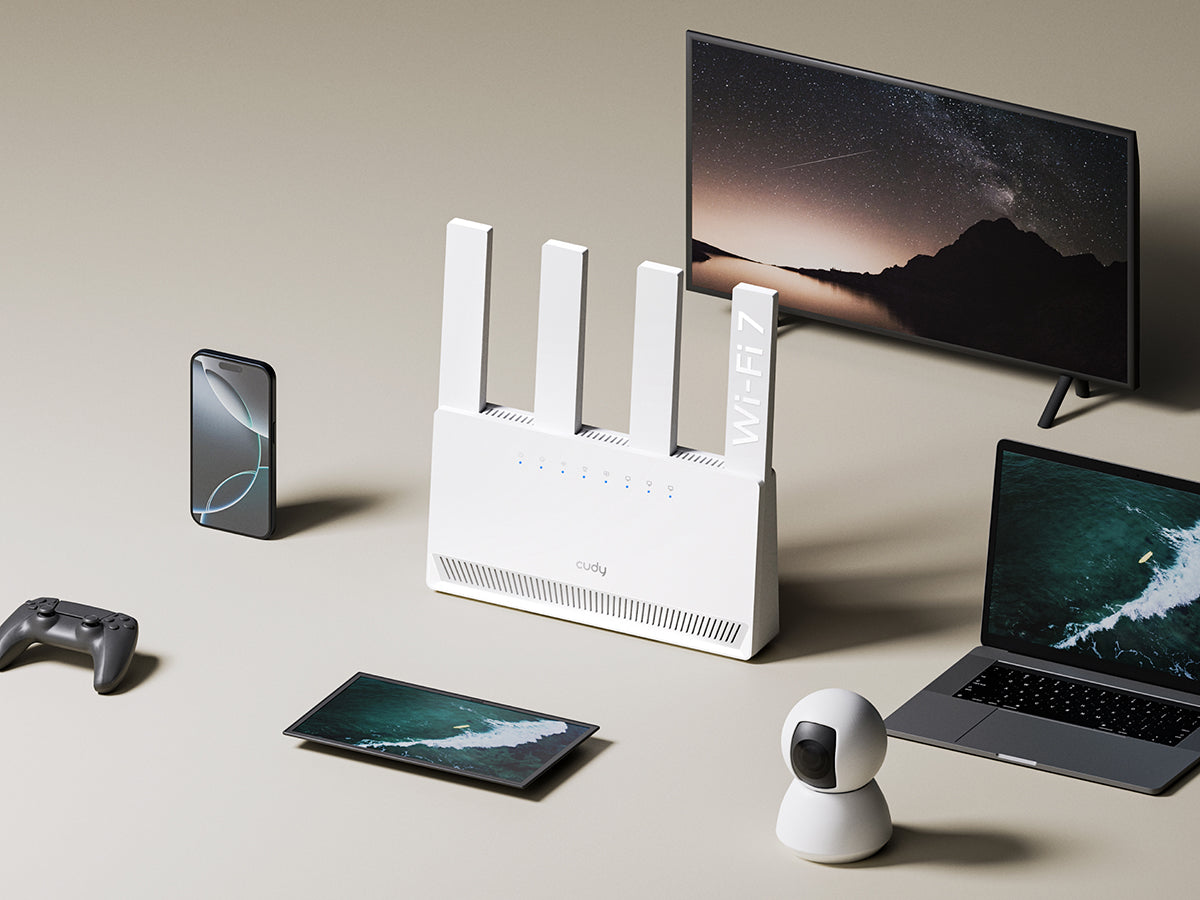
Wi-Fi 7 is becoming increasingly common in routers, smartphones, laptops and other connected devices. At the same time, manufacturers are already showing early Wi-Fi 8 hardware.
This creates an important question for consumers: Should you buy Wi-Fi 7 now, or wait for Wi-Fi 8?
The answer depends on what you use your network for, how fast your internet connection is, how many devices you have, and whether you care more about maximum speed or long-term reliability.
1 What Is Wi-Fi 7?
Wi-Fi 7 is the common name for the IEEE 802.11be wireless standard. It is designed to deliver higher throughput, lower latency and better network efficiency than Wi-Fi 6 and Wi-Fi 6E.
One of its most important technologies is Multi-Link Operation, or MLO.
MLO allows compatible devices to use multiple wireless links, potentially improving throughput, latency and connection reliability.
Wi-Fi 7 also supports wider channels, including up to 320MHz channels where the required spectrum is available.
⚡ Higher Throughput
Wi-Fi 7 is designed for extremely high throughput and can make better use of modern multi-gigabit internet connections.
🔗 Multi-Link Operation
MLO can combine or intelligently use multiple wireless links, helping improve performance and responsiveness.
📶 Wider Channels
Wi-Fi 7 can use channels up to 320MHz wide in supported spectrum, creating more capacity for demanding applications.
🎮 Lower Latency
Better link management and network efficiency can help reduce latency for gaming, video calls and real-time applications.
2 What Is Wi-Fi 8?
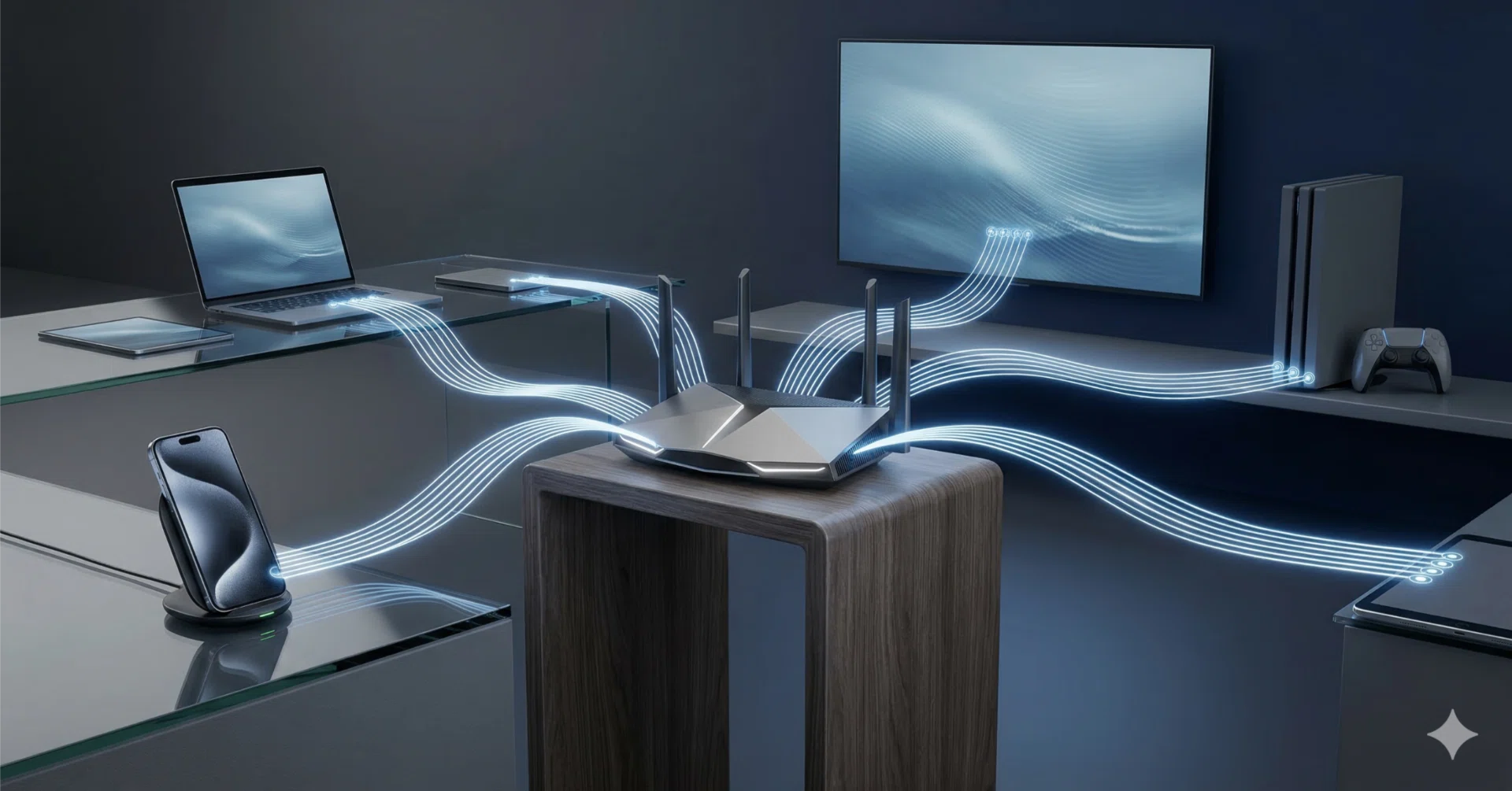
Wi-Fi 8 is associated with the IEEE 802.11bn generation and is being developed as the next major step after Wi-Fi 7.
Interestingly, Wi-Fi 8 is not simply about pushing theoretical speed numbers higher.
A major focus is expected to be Ultra High Reliability, improved coverage, lower latency and more consistent performance in difficult wireless environments.
This means the next generation could be less about saying “my router is faster” and more about saying “my connection stays reliable everywhere in my home.”
🛡️ Ultra High Reliability
Wi-Fi 8 is being designed with a strong focus on maintaining reliable connections even when wireless conditions are difficult.
📡 Better Coverage
Future Wi-Fi 8 systems are expected to improve performance at longer distances and in areas where Wi-Fi signals normally weaken.
🏠 Smarter Home Networking
Wi-Fi 8 could become particularly useful as homes continue adding cameras, smart appliances, TVs, computers and connected devices.
🎯 More Consistent Performance
Instead of focusing only on peak speed, Wi-Fi 8 aims to provide more predictable performance under interference and congestion.
⚔️ Wi-Fi 7 vs Wi-Fi 8: The Main Difference
| Feature | Wi-Fi 7 | Wi-Fi 8 |
|---|---|---|
| IEEE Generation | 802.11be | 802.11bn |
| Main Focus | Speed + capacity + low latency | Reliability + stability + latency |
| Multi-Link Operation | Yes | Expected to evolve further |
| 320MHz Channels | Yes | Builds on existing capabilities |
| Long-Range Reliability | Improved | Major focus |
| Peak Speed | Extremely high | Not the only priority |
| Current Availability | Widely available | Early hardware emerging |
| Standard Status | Established | Still under development |
🚀 Why Wi-Fi 7 Matters in 2026
Wi-Fi 7 is no longer just a technology for early adopters. More smartphones, laptops and networking devices now support the standard.
Industry data also shows rapid growth in Wi-Fi 7 adoption. IDC reported that Wi-Fi 7 represented 44.5% of enterprise-dependent access point revenue in the first quarter of 2026.
That is important because it means Wi-Fi 7 is moving from “future technology” toward a real networking upgrade.
🎮 Gaming
Lower latency and better network efficiency can make Wi-Fi 7 attractive for online gaming and cloud gaming.
🎬 4K and 8K Streaming
Higher throughput can help households stream high-resolution content while multiple devices are connected.
💻 Work From Home
Video meetings, cloud applications and large file transfers can benefit from faster and more responsive wireless networking.
🏠 Smart Homes
Modern homes can have dozens of connected devices. Better network capacity becomes increasingly important as connected devices multiply.
🔥 Wi-Fi 8 Is Trying to Solve a Different Problem
Imagine having a very fast Wi-Fi connection in the room next to your router, but a weak and unstable connection upstairs.
More speed does not automatically solve that problem.
This is where Wi-Fi 8 becomes interesting. The next generation is being designed around improved reliability, better performance under interference and more consistent connectivity.
In other words: Wi-Fi 7 is heavily focused on making wireless faster. Wi-Fi 8 is increasingly focused on making wireless more reliable.
🤔 Should You Upgrade to Wi-Fi 7?
For most people buying a new router in 2026, Wi-Fi 7 is the more practical choice.
It is already available, compatible devices are becoming more common, and the technology offers meaningful improvements over older Wi-Fi generations.
If your current router is several years old, upgrading to Wi-Fi 7 could make a noticeable difference, especially if you have a fast fiber connection and many connected devices.
⏳ Who Should Wait for Wi-Fi 8?
- Users who already have an excellent Wi-Fi 7 network.
- Technology enthusiasts who want to test early-generation hardware.
- People planning a major home-network upgrade several years from now.
- Users who specifically need improved reliability and coverage rather than simply higher peak speeds.
📡 Wi-Fi 8 Hardware Is Already Appearing
One of the most interesting developments in September 2026 is that networking companies are already showing Wi-Fi 8-compatible hardware.
At IFA 2026, TP-Link introduced new Wi-Fi 8 networking products, including the Archer 8 Ultra and Deco 8 Ultra.
The company is emphasizing reliability, coverage and consistent wireless performance rather than simply increasing theoretical speed numbers.
This is a major sign that Wi-Fi 8 is moving from research and development toward actual consumer hardware.
⚡ Which One Is Faster?
This question sounds simple, but the answer is more complicated.
Wi-Fi 7 is already designed for extremely high throughput, including very wide channels and advanced modulation technologies.
Wi-Fi 8 is not simply being designed as “Wi-Fi 7 but faster.” Its development places greater emphasis on reliability and predictable performance.
Therefore, a Wi-Fi 8 network may not need to dramatically increase peak theoretical speed to provide a better real-world experience.
🎯 Wi-Fi 7 vs Wi-Fi 8 for Gaming
Gamers care about more than download speed.
Latency, jitter, packet loss and connection stability can have a much greater impact on the gaming experience.
Wi-Fi 7 already brings major improvements for low-latency networking, especially through technologies such as Multi-Link Operation.
Wi-Fi 8 is expected to take the reliability side even further, making it particularly interesting for demanding real-time applications.
🏠 Which Wi-Fi Standard Is Better for a Smart Home?
If your home has smart TVs, security cameras, gaming consoles, phones, laptops, tablets, speakers and smart appliances, network congestion can become a real problem.
Wi-Fi 7 is already a strong solution for high-device environments. Its increased capacity and multi-link features can help manage demanding wireless traffic.
Wi-Fi 8 is expected to improve reliability even further, which could become increasingly important as smart homes become more connected.
🛒 Should You Buy a Wi-Fi 7 Router in 2026?
Yes, for most users.
If you need a new router today, there is little reason to wait several years simply because Wi-Fi 8 is coming.
Wi-Fi 7 is mature enough to be a practical upgrade and offers excellent performance for modern smartphones, laptops, gaming, streaming and high-speed fiber connections.
Wi-Fi 8 is exciting, but early hardware can be expensive and the final standard is still evolving.
👍 Wi-Fi 7 vs Wi-Fi 8: Pros and Cons
🟢 Wi-Fi 7 Advantages
- Available now
- Excellent performance
- Multi-Link Operation
- Very high throughput
- Lower latency
- Growing device support
- More mature hardware ecosystem
🔵 Wi-Fi 8 Advantages
- Focus on reliability
- Improved long-range performance
- Designed for difficult wireless environments
- Potentially better consistency
- Future-focused technology
- Interesting for advanced smart homes
📊 Quick Verdict
| Your Situation | Best Choice |
|---|---|
| You need a new router today | Wi-Fi 7 |
| You have a slow old router | Wi-Fi 7 |
| You have multi-gigabit fiber | Wi-Fi 7 |
| You are a serious gamer | Wi-Fi 7 now / Wi-Fi 8 later |
| You already own a good Wi-Fi 7 router | Wait |
| You want the newest networking technology | Watch Wi-Fi 8 |
| You care most about reliability and coverage | Watch Wi-Fi 8 |
❓ Frequently Asked Questions
What is Wi-Fi 7?
Wi-Fi 7 is the IEEE 802.11be generation of wireless networking. It focuses on higher throughput, lower latency, greater capacity and technologies such as Multi-Link Operation.
What is Wi-Fi 8?
Wi-Fi 8 refers to the next-generation 802.11bn wireless technology. Its development places strong emphasis on reliability, consistency, latency and performance in challenging wireless environments.
Is Wi-Fi 8 faster than Wi-Fi 7?
Wi-Fi 8 should not be viewed simply as a higher-speed version of Wi-Fi 7. Its major goal is improved reliability and consistent real-world performance.
Should I buy Wi-Fi 7 in 2026?
For most users who need a new router now, Wi-Fi 7 is the practical choice because the ecosystem is already available and mature.
Should I wait for Wi-Fi 8?
If your current Wi-Fi 7 network works well, there is no urgent reason to upgrade. Waiting can make sense if you want mature Wi-Fi 8 hardware and broader device support.
Does Wi-Fi 7 work with older devices?
Yes. Wi-Fi 7 routers can generally support older Wi-Fi generations. However, older devices will not receive the full benefits of Wi-Fi 7-specific features.
Will Wi-Fi 8 replace Wi-Fi 7 immediately?
No. Wi-Fi 7 will remain useful for years. New Wi-Fi generations normally coexist with previous generations for a long period.
🏁 Final Verdict
Wi-Fi 7 is the technology you can confidently buy today.
It delivers extremely high throughput, lower latency, improved capacity and advanced features such as Multi-Link Operation.
Wi-Fi 8 is the more exciting technology to watch for the future. Instead of focusing only on raw speed, it aims to make wireless connections more reliable, consistent and efficient.
So if your router needs replacing in 2026, Wi-Fi 7 is the safer choice.
If you already have a good Wi-Fi 7 setup, there is no need to rush into Wi-Fi 8.
The next few years could make home networking much more reliable, especially as smart homes, cloud gaming, high-resolution streaming and connected devices continue to grow.
📡 Stay Ahead of the Next Technology Upgrade
Follow TechHaseeb for the latest technology news, smartphones, networking updates, gadgets and practical tech guides.
Visit TechHaseeb